
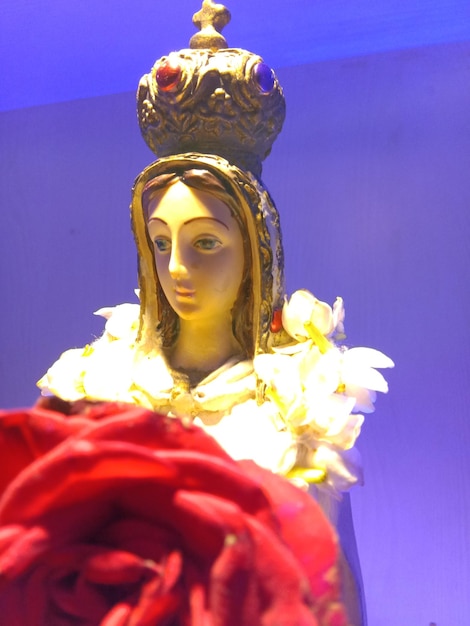
In the grand tapestry of faith, woven with threads of hope, love, and intercession, stands a figure of paramount importance—Mother Mary, the Blessed Virgin. Her role transcends mere symbolism; she embodies a living testament of faithfulness, humility, and the nurturance of divine grace. Within the hearts of millions, the invocation “Mother Mary, pray for us,” echoes with profound reverence, encapsulating centuries of devotion and profound spirituality.
The roots of Marian devotion stretch back to the early Christian communities. As stories of Christ’s life and teachings began to circulate, so too did the veneration of His mother. Early Church Fathers, such as St. Ambrose and St. Augustine, extolled her virtues, emphasizing her unique relationship with the Almighty. In their writings, they portrayed Mary not merely as the vessel of Christ but as a compassionate intercessor, a conduit through which the faithful might seek solace and mercy.
Throughout the ages, the role of Mother Mary as intercessor evolved, gaining prominence in the liturgical practices of the Church. By the Middle Ages, her image was firmly ensconced in art, prayers, and liturgies. The Hail Mary, a simple yet powerful request for her intercession, began to flourish as a staple of devotional life. Reciting those sacred words—”Holy Mary, Mother of God, pray for us sinners, now and at the hour of our death”—the faithful invoke her maternal care, seeking refuge beneath her mantle of protection.
The essence of the prayer to Mother Mary resonates in its call for reliance on a loving and empathetic figure, one who understands the trials of humanity. Just as a mother instinctively nurtures her children, so too does Mary guide us toward her Son, gently leading us to a deeper relationship with Jesus Christ. This maternal intercession is not a mere act; it is an embrace, tender and unwavering, inviting us to lay our burdens at her feet.
In the Byzantine tradition, Mary is often referred to as “Theotokos,” meaning “God-bearer.” This title encapsulates the mystery of her existence, a woman who bore within her the Wonder of the Ages. Each prayer to her is a whisper of gratitude, an acknowledgment of the impossible made possible through her faith. The richness of her story invites contemplation and devotion, calling us to consider her unwavering acceptance of God’s will at the Annunciation. “Let it be done to me according to your word” resounds as a mantra of faith, urging us to surrender to divine providence in our own lives.
As we delve deeper into the meaning of “Mother Mary, pray for us,” we must recognize the layers of spiritual comfort embedded within this invocation. It serves as a reminder of our fragility and the necessity of divine assistance in our earthly pilgrimage. This prayer fosters a profound connection, bridging human experience with the divine. Mother Mary, in her infinite wisdom, intercedes on our behalf, amplifying our petitions and whispers of the heart.
In times of trial, as shadows loom large, the prayer to Mother Mary resonates with particular intensity. The faithful turn to her in moments of despair, illness, and loneliness. Her compassionate heart serves as a beacon of hope, illuminating the path for those navigating the challenges of life. The act of seeking her intercession becomes a healing practice—a communal bond that unites the Church Militant with the Church Triumphant. It reinforces the belief in a loving God who desires our welfare.
Moreover, the feast days dedicated to Mary, such as the Assumption and the Immaculate Conception, further illuminate her significance in our spiritual lives. Each celebration provides an opportunity to reflect upon her virtues—her faith, courage, and unwavering commitment to God’s plan. During these sacred moments, believers are invited to engage in prayer, reflecting upon their own lives and relationships, seeking to emulate her grace and devotion.
“Mother Mary, pray for us,” transcends simple petition; it transforms into a life-giving dialogue. As we utter this prayer, we are called to reciprocate her love. Each invocation empowers us to embody the spirit of service and compassion that Mary exemplified. It inspires us to become conduits of divine love—sharing kindness, extending forgiveness, and fostering community. Our prayers are intertwined with action, echoing the very essence of our faith.
As we embark upon this spiritual journey, we must not overlook the importance of personal prayer. Each day offers an opportunity to engage with Mary in the quietude of our hearts. Through Rosaries and Devotions, meditative silence and expressive lament, we cultivate a relationship with our Heavenly Mother. Prayer becomes not just a practice, but a lifeline, as we invite Mary into the fabric of our daily existence.
In conclusion, invoking “Mother Mary, pray for us,” epitomizes a rich tradition steeped in history, heart, and hope. It is an assurance that we are never alone, that amidst life’s complexities, there exists a gentle woman who understands. May we embrace her call, allowing her intercession to guide our paths, inspire our actions, and deepen our faith.
Let us unite in a prayer, a heartfelt supplication to our beloved Mother:
O Mary, Mother of God,
With a heart full of love, we come to you,
In moments of sorrow, joy, and uncertainty,
We seek your intercession—praying for us, your humble children.
Wrap us in your mantle of tenderness,
Lead us closer to your Son,
Instill in us the strength to bear our burdens,
And guide us along the path of righteousness.
In your embrace, we find solace,
In your presence, we are renewed—
Mother Mary, pray for us, now and always.